
SCCT shares updated CCTA recommendations
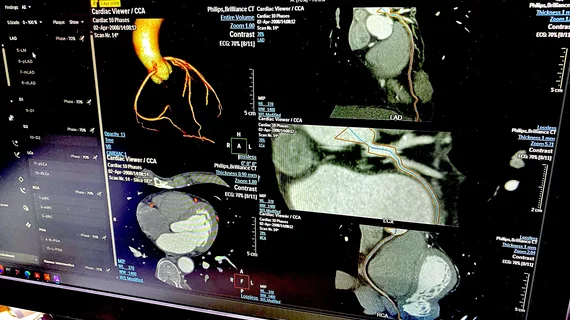
The Society of Cardiovascular Computed Tomography (SCCT) has published a new expert consensus document on the interpretation and reporting of coronary CT angiography (CCTA). The update replaces a 2014 guidance and incorporates advances in scanner technology, image reconstruction, plaque assessment and standardized reporting incorporating CAD-RADS 2.0.
The expert consensus, published in Journal of Cardiovascular Computed Tomography (JCCT), offers new evidence-based recommendations for interpreting CCTA.[1] It cover topics such as image formats, coronary artery interpretation, image quality, artifacts and pitfalls, non-coronary cardiac findings, and extra-cardiac structures. The document also provides reporting guidance on clinical data, imaging data, image quality, findings, medications and other patient factors.
The authors noted that a lot has changed in CCTA over the past 11 years.
“Since our last guideline in 2014, CCTA has moved from a promising diagnostic test to a Class I recommendation for the evaluation of coronary artery disease, with growing evidence for the prognostic value of plaque characterization,” writing group co-chair Quynh Truong, MD, MPH, a professor of radiology at Weill Cornell Medicine and attending radiologist at the NewYork-Presbyterian Hospital, said in a statement. “This update ensures that interpretation and reporting standards keep pace with that evidence, and with technologies like multi-energy and photon-counting CT that are transforming what we can see and measure.”
Reporting CCTA findings is more technical now due to the fact that more data can now be pulled from these scans, added writing group co-chair Prabhakar Rajiah, MBBS, MD, a radiologist at Mayo Clinic. He said interpretations should extend beyond identifying luminal stenosis and readers should assess plaque presence, composition, burden and high-risk features. In addition, they should be evaluating occlusions, stents, bypass grafts, coronary anomalies and other nonatherosclerotic abnormalities.
He said the goal of the document is to promote standardized characterization of stenosis and plaque burden consistent with CAD-RADS 2.0, which will support clearer communication between interpreting physicians and referring clinicians.
“Consistent interpretation and reporting are essential if the growing technical capabilities of CCTA are to translate into better patient care,” Rajiah said. “By providing a shared approach and standardized language, we hope this document will improve diagnostic confidence, reduce interpretive variability and strengthen communication between cardiac imagers and referring clinicians.”
The document also expands content on semi-automated and automated artificial intelligence (AI) tools for coronary segmentation, plaque quantification and artifact mitigation (including ECG editing), which Truong said reflects the growing role of advanced post-processing in routine clinical workflows.
The guideline was developed by 14 international cardiac CT experts using a modified Delphi process with defined thresholds for consensus, lending the recommendations a transparent, reproducible level of evidence and expert agreement.

Dave Fornell has covered healthcare for more than 17 years, with a focus in cardiology and radiology. Fornell is a 5-time winner of a Jesse H. Neal Award, the most prestigious editorial honors in the field of specialized journalism. The wins included best technical content, best use of social media and best COVID-19 coverage. Fornell was also a three-time Neal finalist for best range of work by a single author. He produces more than 100 editorial videos each year, most of them interviews with key opinion leaders in medicine. He also writes technical articles, covers key trends, conducts video hospital site visits, and is very involved with social media. E-mail: [email protected]