
FDA clears AI-enabled cardiac MR planning technology from Philips
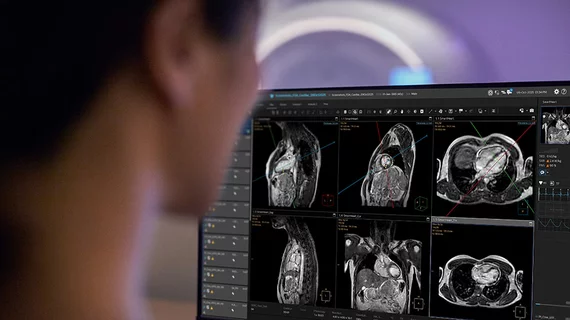
Philips has secured U.S. Food and Drug Administration (FDA) clearance for SmartHeart, the company’s new artificial intelligence (AI)-powered planning technology for cardiac magetic reasonance imaging (CMR) exams.
SmartHeart was designed to help cardiology and radiology departments increase productivity—and earn more money for the organization—by automating the entire planning process for CMR exams in less than 30 seconds. It automates the scanner’s settings for 14 different views in a way that makes the complex exams easier to perform for less experienced technologists and minimizes inter-operator variability.
“Cardiac MR is one of the most powerful tools available to assess the heart, yet its complexity and exam length have historically constrained its broader clinical impact,” Ioannis Panagiotelis, PhD, MR business leader at Philips, said in a statement. “With SmartHeart embedded directly into the planning workflow, Philips is fundamentally redefining how CMR is performed—transforming it from a highly specialized, time-intensive procedure into a streamlined, intelligent, and scalable solution. This empowers clinicians to deliver consistent, precision cardiac care to significantly more patients.”
SmartHeart linked to several benefits for cardiology, radiology departments
According to Philips, this AI-powered technology can reduce the number of breath holds needed from patients by up to 75% for many views. This becomes especially important, the company emphasized, when patients present for imaging who are already suffering from such issues as dyspnea and atrial fibrillation.
Another key feature of this new technology is Cardiac MoCo, which Philips said can correct for both cardiac and respiratory motion that may occur during CMR exams. The company’s CardiacQuant Perfusion, meanwhile, helps clinicians noninvasively diagnose “subtle perfusion deficits.”

Michael has more than 19 years of experience as a professional writer and editor. He has written at length about cardiology, radiology, artificial intelligence and other key healthcare topics.