
Heartflow tech limits unnecessary catheterizations in patients with suspected CAD
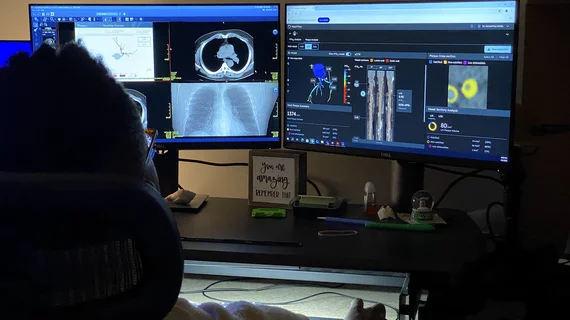
Using Heartflow’s FFRCT Analysis software to evaluate coronary CT angiography (CCTA) scans is associated with a significant reduction in unnecessary catheterizations, according to new late-breaking data presented at ESC Congress 2026 and published in JACC.[1]
FFRCT Analysis is Heartflow’s artificial intelligence (AI)-powered software that evaluates CCTA results. It provides both anatomic information and physiologic data on individual lesions, helping care teams determine if an invasive coronary angiography (ICA) is truly necessary.
The FUSION trial included 528 patients with a median age of 63 years old. All patients underwent CCTA for suspected coronary artery disease (CAD) and presented with 50%-90% stenosis. They were then randomized to either undergo FFRCT-guided care or usual care.
Overall, FFRCT-guided care was associated with a 44% relative reduction in the number of patients who underwent an ICA and showed no signs of CAD. In addition, revascularization rates, major adverse cardiovascular event rates, quality of life and costs were comparable for the two groups. This suggests the reduced number of ICAs did not make a negative impact on patient care.
“When a CCTA shows intermediate stenosis, physicians face a critical decision point: is this blockage significant enough to warrant an invasive procedure in case of persistent symptoms or high-risk anatomy? Sending every one of these patients to the cath lab means unnecessary risk, recovery time and anxiety,” Alexander Hirsch, MD, principal investigator of FUSION and an associate professor of cardiology at Erasmus MC in Rotterdam, The Netherlands, told Cardiovascular Business. “Furthermore, cath labs lose capacity that could be directed to patients needing urgent care. The FUSION data show that diagnostic efficiency can be significantly improved with Heartflow FFRCT Analysis, which can cut unnecessary catheterizations nearly in half without compromising safety, easing pressure on the system while ensuring the right patients still get timely, appropriate care.”
“One of the persistent challenges in cardiology has been accurately identifying, prior to catheterization, which patients have disease severe enough to warrant an invasive procedure,” Campbell Rogers, MD, chief medical officer of Heartflow, said in a company statement. “The FUSION data demonstrate that our technology can meaningfully address this challenge, providing physicians with more precise insight into a patient's disease burden after CCTA has documented stenosis over 50%.”
Click here to read the full study in JACC, the flagship journal of the American College of Cardiology.

Michael has more than 19 years of experience as a professional writer and editor. He has written at length about cardiology, radiology, artificial intelligence and other key healthcare topics.