
ASNC reports shortage of cardiac amyloidosis radiotracers
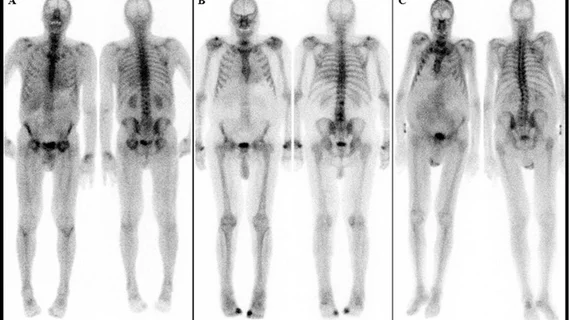
The American Society of Nuclear Cardiology (ASNC) has confirmed that there is a new shortage of tracers for diagnosing transthyretin (ATTR) cardiac amyloidosis. The vendors said supply disruptions could lead to a shortage that lasts months.
ASNC received recent reports of shortages from several U.S. sites for both technetium-99m pyrophosphate (Tc-99m PYP) and and Tc-99m hydroxymethylene diphosphonate (HMDP or HDP). This prompted the society to reach out to the two manufacturers of these agents for more information and send an update to its members Jan. 14.
"Several leading hospitals that do this imaging received notices about the shortage and I got frantic emails from my colleagues," explained ASNC President Jamieson M. Bourque, MD, medical director of nuclear cardiology, echocardiography and the stress laboratory at UVA Health and professor of medicine and radiology at the University of Virginia. "It is definitely frustrating as we were ramping up a noninvasive diagnostic pathway that is otherwise not available."
Sun Pharmaceutical Industries Inc. reported it currently has no PYP available and did not have a timeline for when the product would be available again.
Curium U.S. LLC, the other PYP manufacturer, said it recently received U.S. Food and Drug Administration approval for a new active ingredient supplier. The company told ASNC it has since produced a new lot of its Technescan PYP radiotracer that the company hopes to release by the end of February. But there will be limited supply of Technescan PYP over the coming months until Curium can produce and release multiple lots to rebuild its stock.
Curium also makes the HMDP/HDP tracer Technescan HDP, but it is reporting demand has increased with the limited availability of PYP. Curium said it plans to release another lot of Technescan HDP in January, and this will offer a supply of the tracer for about 3 to 4 weeks. ASNC said the company hopes to release another lot of Technescan HDP before the end of February. However, the company said the supply of Technescan HDP will be limited in the coming months until Curium can build its production.
Both radiotracers are currently listed on the FDA drug shortage list. According to the FDA website, both vendors said there is a shortage of an active ingredient. Sun expects the shortage will persist until at least the second quarter of 2026.
The PYP bone scintigraphy radiopharmaceutical was adopted for cardiac imaging because it is excels at imaging amyloid transthyretin (ATTR) cardiac amyloidosis to confirm diagnosis and enable initiation of treatment. The emergence of drug therapies have significantly improved outcomes in ATTR patients and has increased demand for this nuclear test. But the supply of PYP has been plagued with issues.
Bourque said both PYP and HDP are good tracers to use. PYP was more widely used up until the last shortage because there was more clinical data on it, but HDP saw then wider adoption and a new accumulation of data.
ASNC suggests labs contact radiopharmacies to find out more about their current supplies.

Dave Fornell has covered healthcare for more than 17 years, with a focus in cardiology and radiology. Fornell is a 5-time winner of a Jesse H. Neal Award, the most prestigious editorial honors in the field of specialized journalism. The wins included best technical content, best use of social media and best COVID-19 coverage. Fornell was also a three-time Neal finalist for best range of work by a single author. He produces more than 100 editorial videos each year, most of them interviews with key opinion leaders in medicine. He also writes technical articles, covers key trends, conducts video hospital site visits, and is very involved with social media. E-mail: [email protected]