
Both FDA-approved renal denervation systems linked to positive real-world outcomes
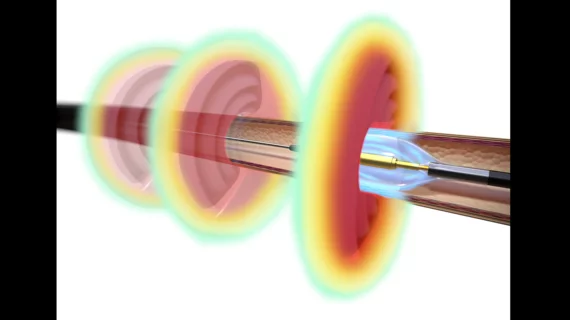
The two renal denervation (RDN) systems approved by the U.S. Food and Drug Administration (FDA) for treating uncontrolled hypertension were both associated with positive real-world data at TCT 2026 in San Diego.
Recor Medical’s Paradise Ultrasound RDN (uRDN) system and Medtronic’s Symplicity Spyral RDN system both secured FDA approval in November 2023. Now, three years later, the use of RDN to treat uncontrolled hypertension represents one of healthcare’s biggest trends.
Multiple TCT presentations focused on the real-world impact of these technologies. Overall, the message was clear: RDN is s safe, effective and consistent treatment option for uncontrolled hypertension.
Recor Medical’s Paradise Ultrasound RDN system
Recor Medical’s Paradise uRDN system was the topic of several sessions at the annual conference. For example, Felix Mahfoud, MD, director of the clinic for cardiology at University Hospital Basel, shared real-world data on 276 patients treated across nine European countries. After one year, these patients experienced a mean reduction in office systolic blood pressure of 19.5 mmHg, including a mean reduction of 22 mmHg in those with a history of hypertensive crisis.
In a statement, Mahfoud highlighted these findings as “compelling real-world evidence supporting the safety and effectiveness of the Paradise uRDN system.”
“The magnitude of blood pressure reduction observed in routine clinical practice is clinically meaningful, including among patients with a history of hypertensive crisis, a population with substantial unmet need,” he added.
Another real-world study presented at TCT focused on 238 pooled patients treated at one of eight U.S. hospitals. Overall, the procedural success rate was 100% and the mean reduction in office systolic blood pressure was 26.9 mmHg.
Clinicians at TCT also presented long-term follow-up data on Recor Medical’s uRDN technology. Four-year findings from the RADIANCE-HTN SOLO, RADIANCE II and RADIANCE-HTN TRIO trials pointed to a mean reduction of office systolic blood pressure of 14.9 mmHg. Ninety-two percent of patients either demonstrated a reduction in blood pressure or a decreased reliance on antihypertensive medication following treatment.
“Many patients and clinicians have asked about the longer-term results following a renal denervation procedure, and in this light it is very encouraging to report sustained blood pressure reductions out to 4 years after uRDN,” Ajay J. Kirtane, MD, director of Columbia Interventional Cardiovascular Care and a professor with Columbia University Irving Medical Center, said in the same statement.

The Symplicity Spyral RDN system. Graphic courtesy of Medtronic.
Medtronic’s Symplicity Spyral RDN system
Late-breaking data on Medtronic’s Symplicity Spyral RDN system were presented at TCT and then simultaneously published in Circulation: Cardiovascular Interventions.[1] SPYRAL AFFIRM included nearly 600 patients treated at 73 different U.S. facilities. All patients were 65 years old or older.
Overall, the mean reduction in office systolic blood pressure was 18.2 mmHg after six months and adverse clinical events were “uncommon.”
“Importantly, the study also demonstrated significant reductions in home blood pressure, offering insight into how patients are responding beyond the clinical setting and in their everyday lives,” David Kandzari, MD, chief of Piedmont Heart Institute and Cardiovascular Services and lead principal investigator of SPYRAL AFFIRM, said in a statement. “These findings reinforce the potential benefit of renal denervation in combination with lifestyle changes and medication for patients who continue to struggle with uncontrolled hypertension.”

Michael has more than 19 years of experience as a professional writer and editor. He has written at length about cardiology, radiology, artificial intelligence and other key healthcare topics.