
Gore completes acquisition of medtech company behind next-gen heart device
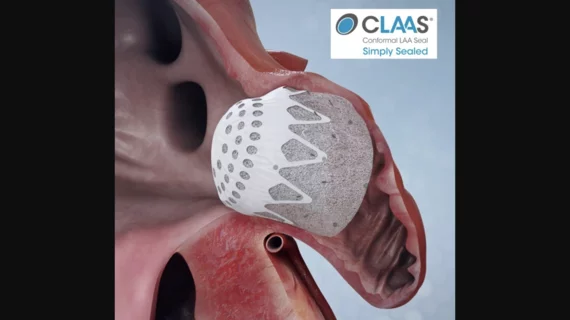
W. L. Gore & Associates, a global materials science company with headquarters in Delaware, has finalized its acquisition of Conformal Medical, the New Hampshire-based medical device company behind the CLAAS AcuFORM left atrial appendage occlusion (LAAO) system. Gore first announced its intention to acquire Conformal Medical in January.
The CLAAS AcuFORM LAAO system is an investigational device designed to reduce the risk of stroke in patients presenting with atrial fibrillation. It uses a proprietary foam implant that conforms to the patient’s anatomy, ensuring a secure fit.
Financial terms of the deal were not announced. Conformal Medical is now officially a wholly owned subsidiary of Gore that will remain focused on advancing the CLAAS AcuFORM device and developing other investigational heart devices.
“With this acquisition now complete, we are further strengthening Gore’s product development pipeline in endovascular treatment, with the goal of reaching more patients,” Bret Snyder, board chair and CEO of W. L. Gore & Associates, said in a statement. “We are delighted to officially welcome Conformal Medical to our enterprise.”
“Joining the Gore enterprise represents an important next chapter for Conformal Medical,” added James Reinstein, president and CEO of Conformal Medical. “Gore’s experience in medical technology development and its commitment to innovation will enable us to benefit from their science-driven approach and long-time commitment to improving patient care.”
Gore’s medical division gaining momentum
While Gore is involved in a wide range of industries, its medical division has been going strong for more than 50 years. In fact, the company’s GORE-TEX Vascular Graft was first made available commercially back in 1975.
This acquisition of Conformal Medical represents yet another sign of the division’s momentum. In January, the U.S. Food and Drug Administration approved Gore’s new stent for the treatment of deep venous disease in the inferior vena cava (IVC), iliac and iliofemoral veins.
“Patients will benefit from a device that is designed specifically for this disease and its unique anatomic and physiologic challenges, including preservation of optimal flow dynamics through iliocaval confluence and side branch preservation,” Kush Desai, MD, a vascular and interventional radiologist with Northwestern Medicine, said at the time.

Michael has more than 19 years of experience as a professional writer and editor. He has written at length about cardiology, radiology, artificial intelligence and other key healthcare topics.