
FDA clears new PE thrombectomy technologies
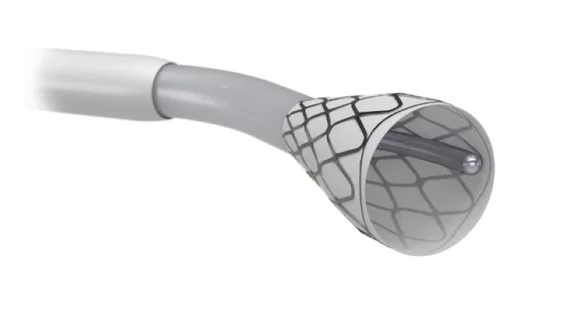
The U.S. Food and Drug Administration (FDA) has cleared Endovascular Engineering's Hēlo Thrombectomy System and Hēlo Blood Return System. Together, these devices represent a new thrombectomy platform for treating acute pulmonary embolism (PE).
The ENGULF IDE study pointed to the platform's high clot reduction and low estimated blood loss. As mechanical thrombectomy continues to be used more and more to treat PE, there is interest in reducing procedural complexity and a need for devices that can reduce right heart strain. This large-bore platform was designed to enable single-pass procedures.
"The treatment of PE with mechanical thrombectomy is rapidly evolving as emerging data and new technologies continue to shape the field. These clearances mark an important milestone in that evolution," Eric Secemsky, MD, director of vascular intervention with Beth Israel Deaconess Medical Center in Boston, said in a statement. "The platform addresses real practical challenges we face in these procedures, and I believe it has the potential to meaningfully expand access to mechanical thrombectomy for a broad range of patients."
The system's low-profile 15 French crossing profile and steerable navigation enables physician-controlled movement within the pulmonary vasculature. A 24 French clot ingestion funnel on the distal end of the catheter uses continuous aspiration and mechanical clot disruption.
The unique Hēlo Blood Return System returns blood to the body rather than aspirating it. This first-of-its-kind technology reduced median blood loss by 97% in the ENGULF trial, which was presented earlier this year at the Society for Cardiovascular Angiography and Interventions (SCAI) 2026 Scientific Sessions.
“This first-of-its-kind blood return system permits operators to remove more thrombus without having to be concerned about blood loss,” Andrew Klein, MD, ENGULF national co-principal Investigator and an interventional cardiologist at Piedmont Heart Institute in Atlanta, said in a statement after the SCAI presentation. “The blood return system provides confidence to operators in knowing they are returning high-quality blood back to the patient in a safer, more timely, and effective manner. This, in turn, allows operators to be more aggressive about clot removal, which should make patients feel better faster.”

Dave Fornell has covered healthcare for more than 17 years, with a focus in cardiology and radiology. Fornell is a 5-time winner of a Jesse H. Neal Award, the most prestigious editorial honors in the field of specialized journalism. The wins included best technical content, best use of social media and best COVID-19 coverage. Fornell was also a three-time Neal finalist for best range of work by a single author. He produces more than 100 editorial videos each year, most of them interviews with key opinion leaders in medicine. He also writes technical articles, covers key trends, conducts video hospital site visits, and is very involved with social media. E-mail: [email protected]