
Redo TAVR with self-expanding valves linked to positive early outcomes
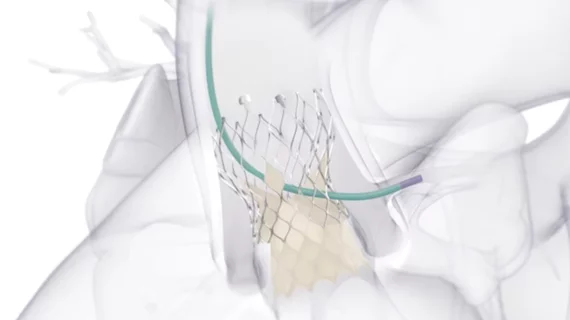
Redo transcatheter aortic valve replacement (TAVR) with a supra-annular, self-expanding transcatheter heart valve (THV) is a safe and effective treatment option, according to new research published in JACC: Cardiovascular Interventions.[1]
The study’s authors explored the Society of Thoracic Surgeons (STS)/American College of Cardiology Transcatheter Valve Therapy (TVT) Registry, focusing on data from more than 400 patients who underwent redo TAVR due to a failed TAVR valve. All patients received a supra-annular, self-expanding THV valve developed by Medtronic, including the Evolut R, Evolut PRO and Evolut PRO+ devices. The mean patient age was 78.9 years old, 63.1% of patients were women and the mean STS risk score was 9.6. Outcomes were compared to a separate cohort of patients who underwent native TAVR.
Overall, after making certain adjustments due to clinically relevant covariates, redo TAVR was linked to mortality and stroke rates comparable to native TAVR after both 30 days and one year. The risk of complications was also low.
In addition, observed improvements in functional status and quality of life were sustained through one year.
The authors also noted that redo TAVR was consistently associated with reduced transvalvular gradients after one year, though gradients were still ultimately higher than after native TAVR procedures. On the other hand, no significant differences were identified between redo TAVR and native TAVR in terms of aortic regurgitation after 30 days or one year.
“These findings support redo-TAVR with Evolut as a feasible and effective treatment strategy in appropriately selected high-risk patients,” wrote first author Toby Rogers, MD, an interventional cardiologist with MedStar Washington Hospital Center, and colleagues.
Rogers et al. did emphasize, however, that more researcher with longer follow-up periods are still necessary.
“The TVT Registry records patient data for only one year after TAVR,” the group wrote. “Randomized trials comparing redo TAVR and surgical explantation are needed in younger low-risk patients who present with THV failure.”
Medtronic did fund this study. Click here to read the full analysis.

Michael has more than 19 years of experience as a professional writer and editor. He has written at length about cardiology, radiology, artificial intelligence and other key healthcare topics.