
TAVR in patients with bicuspid aortic valve stenosis: Does device type matter?
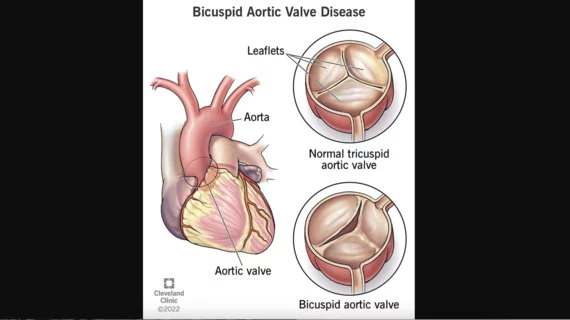
Self-expanding and balloon-expandable transcatheter aortic valve replacement (TAVR) valves are associated with comparable three-year outcomes when treating patients with bicuspid aortic valve (BAV) stenosis, according to new research published in Circulation.[1]
The study’s authors noted that more and more care teams are choosing to treat BAV stenosis with TAVR instead of surgical aortic valve replacement. Does one transcatheter heart valve (THV) design hold significant benefits over another? To find out, the group tracked data from nearly 1,500 TAVR patients treated from 2007 to 2021 at one of 29 different facilities. The mean patient age was 78.7 years old, 39.4% were women and the median Society of Thoracic Surgeons predicted risk of mortality score was 3.2%. The study does go all the way back to 2007, but a vast majority of TAVR procedures—91.2%, in fact—were performed from 2014 to 2021.
While 59.6% of patients received a balloon-expandable valve, the other 40.4% received a self-expanding valve. Overall, the in-hospital and 30-day rates of mortality and stroke “did not significantly differ” between patients treated with these two valve types.
However, self-expanding valves were associated with a greater risk of additional valve implantation, paravalvular regurgitation or permanent pacemaker implantation (PPMI). Balloon-expandable valves were associated with a greater risk of annulus rupture and higher transvalvular mean gradients.
The comparable mortality and stroke rates remained in place a full three years after treatment. Also, PPMI remained significantly more common after TAVR with a self-expanding valve at the end of the team’s analysis.
“The type of THV deployment mechanism and inherent technical THV features do not seem to influence major cardiovascular outcomes over a follow-up of three years,” wrote first author Daniele Giacoppo, MD, MSc, PhD, a researcher with the University of Catania in Italy, and colleagues. “Nevertheless, the use of balloon-expandable THVs and self-expanding THVs seems to be associated with different acute complications, particularly annulus rupture and additional transcatheter heart valve implantation, implying some considerations about the case-specific anatomy in the selection of the type of THV to implant.”
Click here to read the full analysis.

Michael has more than 19 years of experience as a professional writer and editor. He has written at length about cardiology, radiology, artificial intelligence and other key healthcare topics.