
TAVR still a safe option for patients with nickel allergies
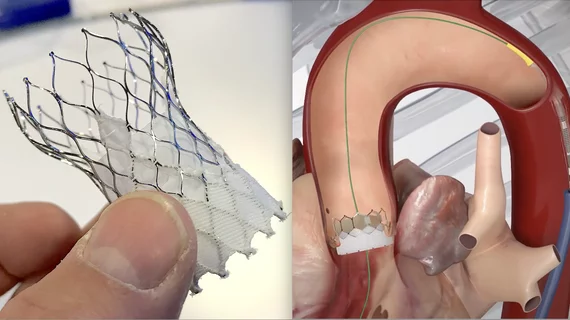
Transcatheter aortic valve replacement (TAVR) appears to be safe and effective in patients who present with a nickel allergy, according to new findings published in JACC: Case Reports.[1]
“Nickel, a common component of metal alloys used in valve frames, could possibly trigger allergic reactions in sensitized individuals,” wrote corresponding author Richard A. Chazal, MD, a cardiologist with the Lee Health Heart Institute, and colleagues. “The prevalence of nickel allergy in the general population is approximately 20%, posing a significant challenge for patients requiring implantation of metallic or metal-containing devices, such as those used in TAVR. Although nickel hypersensitivity related to various devices has been described, the incidence in TAVR cases and the prognostic role of patch testing and outcomes remain unknown.”
Chazal et al. reviewed data from seven patients with a nickel allergy who underwent TAVR. All patients were female, and the age range was 66 years old to 92 years old. Five patients received a self-expanding Evolut Pro, Pro+ or FX valve from Medtronic. The other two patients received a balloon-expandable Sapien 3 valve from Edwards Lifesciences.
No severe adverse events or allergic reactions were reported, “raising the prospect that nickel allergy history should not be considered a major factor in TAVR evaluation.” However, the authors added, it remains possible that the allergies did lead to certain symptoms, but those symptoms were not severe enough to prompt the patient to seek care.
“The discrepancy between our findings and a case reported in the literature, where a patient developed a severe allergic reaction requiring device explantation, raises important questions,” the authors wrote. “Potential explanations include defective surface treatments leading to inadequate nickel release kinetics, an allergic reaction to other metals present in cobalt-chromium alloys, or an individual maladaptive immune response.”
Overall, Chazal and colleagues concluded that patients with nickel allergies “appear to be able to safely undergo TAVR with a low risk of any postprocedural severe allergic symptoms.” The group did call for additional research to learn more about the possibility of nickel allergies leading to “long-term consequences.”
Click here for the full analysis.

Michael has more than 19 years of experience as a professional writer and editor. He has written at length about cardiology, radiology, artificial intelligence and other key healthcare topics.