
PAD patients could be missing out on recommended care following major lower extremity amputations
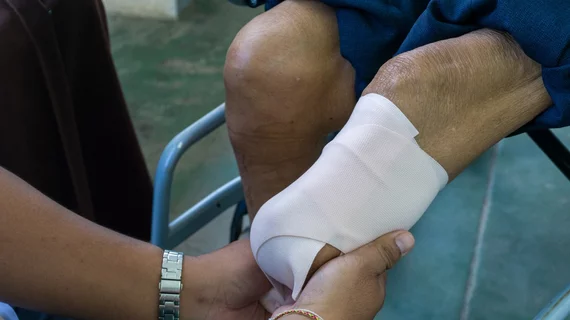
Many patients who undergo a major lower extremity amputation are not receiving the assistance they need after the operation, according to new findings published in the Journal of Vascular Surgery.[1] As high as amputation rates are in the United States, it remains critical that these patients are receiving follow-up care as recommended by physical therapy (PT) specialists.
“Post-operative rehabilitation is crucial towards the functional recovery of patients who undergo a major lower extremity amputation,” wrote first author Andrea Alonso, MD, a researcher with the general surgery residency program with Boston University Chobanian & Avedisian School of Medicine and Boston Medical Center, and colleagues. “The incidence of major amputations has increased due to a higher prevalence of comorbidities in the general population, and such patients experience high rates of morbidity and mortality in addition to poor functional outcomes and reduced quality of life.”
Alonso et al. explored data from nearly 350 patients who underwent a major lower extremity amputation at a high-volume hospital from 2014 to 2024. The mean age was 59.8 years old, 68.4% of patients were men and 82.2% spoke English. While 54.9% of patients had Medicare, 21% had commercial insurance, 18.4% were on Medicaid and 4.6% were not unsured. In addition, 10.6% of patients reported an unstable living situation, which includes difficulties paying rent, frequent moves or facing a risk of homelessness/eviction.
Also, the most common comorbidities among these patients were hypertension (77.2%) and diabetes (74.7%), followed by peripheral artery disease (64.7%), coronary artery disease (37.4%), congestive heart failure (28.5%) and end-stage renal disease (22.7%).
While 69.5% of patients underwent a below-knee amputation, the other 30.5% underwent an above-knee amputation. Infection was the most common indication for the procedure, followed by chronic limb-threatening ischemia, traumatic injuries, acute limb ischemia and operative complications. Nearly 76% of patients were sent to acute rehabilitation (AR) facility or subacute rehabilitation center/skilled nursing facility following the procedure. Other patients were sent home—with or without rehabilitative services—discharged to hospice or left against the medical advice of their care team.
Overall, among discharged patients who received a PT evaluation, 67.9% received concordant care consistent with that evaluation. However, 32.1% of patients had discordant discharges that saw them receive a lower level of care than the PT evaluation recommended. For example, many patients who should have been sent to an AR facility were sent to a subacute rehabilitation center or skilled nursing facility instead.
Patients on Medicaid were much more likely to receive discordant care than patients with other forms of insurance. The two patient groups were otherwise quite similar.
“Our findings suggest that targeted interventions at the hospital and policy levels are needed to reduce inequities in access to intensive rehabilitation for post-operative patients,” the authors wrote. “Hospital-level strategies may include earlier involvement of case managers and social workers to facilitate post-operative placement, particularly for underinsured patients. Implementing responsive preoperative screening protocols for at-risk patients pre-operatively could also enable more effective multidisciplinary disposition planning. At the policy level, improved insurance coverage for inpatient rehabilitation is needed. Although rehabilitation centers often receive state funding for accepting Medicaid patients, many accept only the minimum required number as the reimbursement rates are lower than other insurance types.”
Click here to read the full study in the Journal of Vascular Surgery, an official publication of the Society for Vascular Surgery.

Michael has more than 19 years of experience as a professional writer and editor. He has written at length about cardiology, radiology, artificial intelligence and other key healthcare topics.