CVB homepage

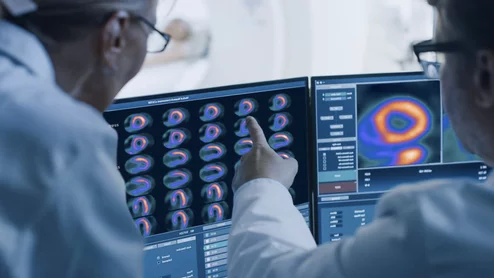
Imagers reviewing flurpiridaz F-18 (Flyrcado) myocardial perfusion PET images. Image from GE Healthcare

Which imaging modality is better for evaluating heart patients, PET or SPECT? After years of discussions and debates, the American Society of Nuclear Cardiology is now ready to point to PET as the No. 1 choice. “There are no clinical scenarios or patient subgroups where cardiac PET with myocardial blood flow should be excluded," the group wrote.

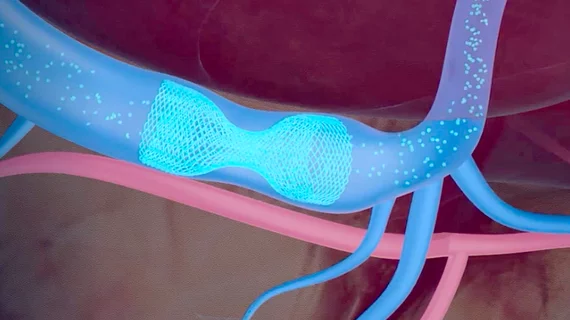
HighLife Transcatheter Mitral Valve Replacement (TMVR) System

HighLife's new-look TMVR technology was designed to treat a wide range of patients. The two-part implant process includes a ring and a valve that centers itself inside that ring.

Samir B. Pancholy, MD, chief interventional cardiologist, Wayne Memorial Hospital in Honesdale, Pennsylvania, discusses the differences in the business models for office based labs (OBL) vs ambulatory surgical centers (ASC) and choosing the right model cardiovascular and vascular procedures. #TCT #SCAI #OBL #ASC

Current payment policies have health systems and physicians all over the country looking to learn more about these two business models. 

old woman or doctor shaking hands with patient

Patients with this specific subtype of severe aortic stenosis, which can sometimes be challenging to diagnose, face a number of additional risks.

AISAP, an Israeli healthcare technology company focused on using artificial intelligence (AI) to enhance medical imaging results, has gained U.S. Food and Drug Administration (FDA) clearance for its new point-of-care ultrasound (POCUS) software platform, AISAP Cardio.

Researchers see potential for this technology to make cardiac screening much easier for physicians who are not trained cardiologists.

Jeff Kuvin, MD, has been instrumental in calling for the creation of a new, independent cardiology board, discussing the progress of the American Board of Cardiovascular Medicine at ACC.24. Photo by Dave Fornell

The American Board of Cardiovascular Medicine is still pushing forward with its efforts to change how cardiologists are certified in the United States. While the group can reapply in the future for a standalone cardiology board, it is also looking at possible partnerships with other organizations.