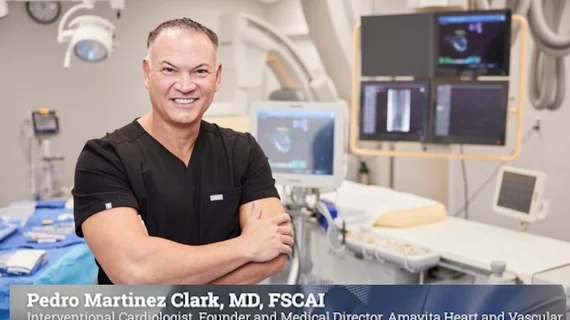
Pedro Martinez Clark, MD, FSCAI, interventional cardiologist, medical director of Amavita Heart and Vascular Health in Miami, set up community outreach efforts to screen patients in low-income neighborhoods.
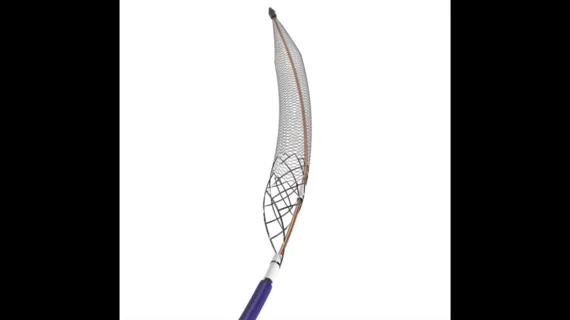
The FDA ruled that this is a Class I recall due to the significant risks for patients. Customers are not required to return the devices, however. Inari Medical has provided updated warnings and recommendations that should be followed.
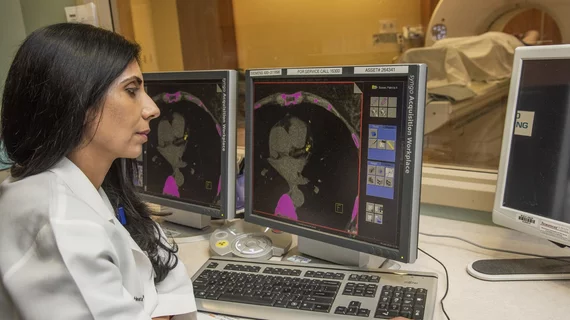
CMS wants feedback after proposing a significant update to CCTA reimbursement payments. The American College of Cardiology, a longtime champion for improved cardiac CT payments, is now helping its members make their voices heard.
Researchers combined data from three well-known clinical trials—NOTION, Evolut Low Risk and PARTNER 3—and evaluated thousands of low-risk patients who presented with severe aortic stenosis.
Medical images of "normal" functional mitral regurgitation, atrial functional mitral regurgitation (AFMR) and ventriculogenic functional mitral regurgitation (VFMR) courtesy of Zoghbi et al. and JACC: Cardiovascular Imaging. Read more here: https://doi.org/10.1016/j.jcmg.2022.08.016.
"These findings underscore the importance of understanding AFMR and its treatment options," one cardiologist said.
The cloud-based platform was designed to help even inexperienced users scan and diagnose a majority of common heart issues within minutes without leaving the patient’s side.
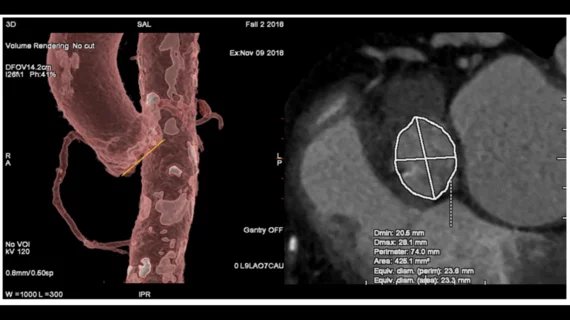
Valve Assist 2 images courtesy of GE Healthcare, Butter et al, Journal of Cardiovascular Imaging.
Planning ahead of TAVR procedures with semi-automated sizing software helps cardiologists match each patient with the best device possible; not undersized or oversized, but something in the middle that would make Goldilocks proud.
Researchers tracked patients undergoing elective cardiac surgery at a high-volume medical center, treating 50% of the selected cohort with above-average oxygen levels.


![Treating atrial functional mitral regurgitation (AFMR) with surgery may be more beneficial than medical therapy alone, according to new data published in JAMA Network Open.[1]](/sites/default/files/styles/top_stories/public/2024-08/screenshot_2024-08-22_at_3.41.23_pm.png.webp?itok=ehrG9Z-m)