
New ASE guideline aims to improve workplace safety for cardiac sonographers
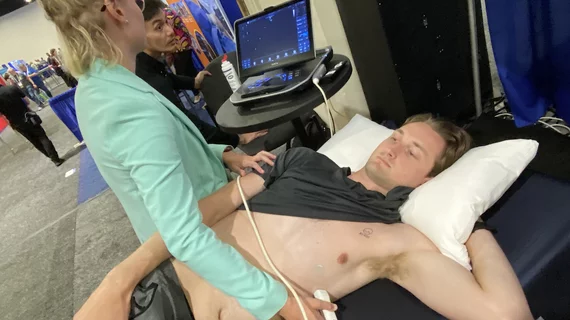
The American Society of Echocardiography (ASE) has published a new guideline with evidence-based recommendations to reduce the risk of work-related musculoskeletal disorders (WRMSDs).
These orthopedic issues impact up to 90% of cardiac sonographers and can limit the longevity of their careers. They are primarily caused by the constant need to bend over a patient while maintaining pressure for long periods of time.
According to the ASE, these injuries also impact patient access to care, workforce retention and the long-term sustainability of the field of echocardiography. The impact is even greater as the ongoing shortages of sonographers continues.
“For too long, musculoskeletal injury has been viewed as an expected part of being a cardiac sonographer,” Ashlee Davis, BSMI, ACS, RDCS, RCCS, the guideline's chair and chief technologist at Duke University Hospital, said in a statement. “This guideline challenges that mindset by demonstrating that many of these injuries are preventable through thoughtful design, education and organizational commitment.”
She said the new Guidelines for the Prevention of Work-Related Musculoskeletal Disorders for Cardiac Sonographers: Recommendations from the American Society of Echocardiography outlines recommendations for injury prevention, ways to make workplace culture prioritize safety and resources for education. The document also includes information on ergonomic equipment standards, safe scanning techniques, how to integrate emerging technologies such as artificial intelligence and much more.
Davis emphasized that injury prevention for clinicians should be viewed as a shared responsibility.
“While individual scanning techniques and ergonomics are important, meaningful change also requires support from employers, healthcare leaders, equipment manufacturers, educators and professional societies,” she said.
Allyson Boyle, MHA, ACS, RDCS, the guideline's co-chair and director of echocardiography at Atrium Health, said the recommendations were developed by experts committed to improving the long-term health of specialists who dedicate their careers to patient care.
“We hope the guideline not only raises awareness of the prevalence and impact of WRMSDs, but also empowers sonographers to prioritize their health and inspires healthcare organizations to take meaningful action,” Boyle said. “Investing in sonographer safety is an investment in workforce sustainability, quality patient care and the future of the profession.”
“Protecting the long-term health of cardiac sonographers is fundamental to the future of the cardiovascular imaging,” added ASE President Cynthia Taub, MD, MBA, the Edward C. Reifenstein Endowed Professor and chair of medicine at the State University of New York Upstate Medical University.

Dave Fornell has covered healthcare for more than 17 years, with a focus in cardiology and radiology. Fornell is a 5-time winner of a Jesse H. Neal Award, the most prestigious editorial honors in the field of specialized journalism. The wins included best technical content, best use of social media and best COVID-19 coverage. Fornell was also a three-time Neal finalist for best range of work by a single author. He produces more than 100 editorial videos each year, most of them interviews with key opinion leaders in medicine. He also writes technical articles, covers key trends, conducts video hospital site visits, and is very involved with social media. E-mail: [email protected]