
New biodegradable PFO closure device shows early potential
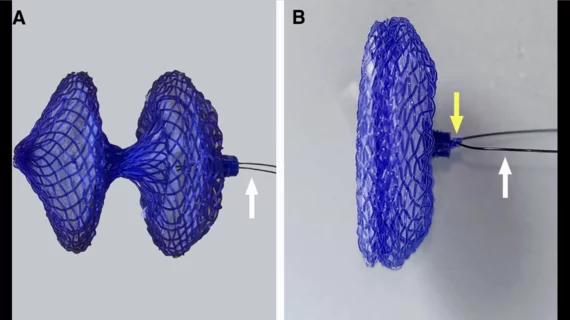
Researchers have developed a new biodegradable patent foramen ovale (PFO) closure device associated with promising two-year outcomes. In fact, the new-look device was found to be noninferior to a traditional nitinol device.
The group published its findings in Circulation.[1]
“Nitinol PFO closure devices are the most widely used worldwide,” wrote first author Fengwen Zhang, MD, PhD, a researcher with the National Clinical Research Center for Cardiovascular Diseases in Beijing, China, and colleagues. “However, the nonbiodegradable nature of nitinol raises concerns regarding long-term complications, including arrhythmias, thromboembolic events, and infections. An additional consideration is the potential need for future interventional procedures that require transseptal access, such as radiofrequency ablation or left atrial appendage occlusion.
Biodegradable closure devices have been suggested in the past, the group noted, but they have always been linked to other risks. They may degrade too quickly, for example, or the building materials may lead to unintended consequences.
Zhang et al. developed a biodegradable PFO closure device of their own that degrades two years after implantation. It was built with biodegradable polydioxanone monofilament and poly-L-lactic acid materials. The group gave it a split-ring shape based on issues with prior biodegradable devices.
Overall, the group tracked data from 96 patients who received the new device and another 94 patients who received a traditional PFO closure device, the Cardi-O-Fix Occluder System from Stairway Medical Technology.
All devices were implanted in 2021. The mean ages were 41 years old for the biodegradable device group and 43.9 years old for the control group. A majority of patients in both groups were female.
Overall, successful PFO closure was seen in 90.6% of biodegradable device patients and 91.5% of traditional device patients. This confirmed that the new device was noninferior in terms of closure success. In addition, from a safety perspective, the biodegradable device was not linked to any deaths or reports of embolism, device thrombus or erosion.
Echocardiography results confirmed that the biodegradable devices all started to break down within the first year and had fully disappeared after two years.
Much more research is still needed on this device. However, these early two-year findings suggest the use of a biodegradable PFO closure device could represent a safe, effective treatment option for patients in the future.
Click here to read the full study.

Michael has more than 19 years of experience as a professional writer and editor. He has written at length about cardiology, radiology, artificial intelligence and other key healthcare topics.