
SCAI seeks feedback on cath lab radiation safety
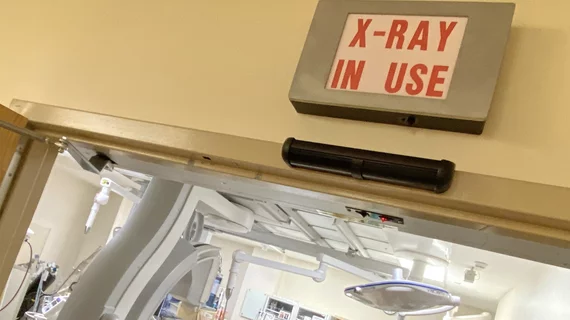
The Society for Cardiovascular Angiography and Interventions (SCAI) is seeking input from healthcare professionals involved with interventional cardiology to take a survey that will help support efforts to improve workplace safety.
The survey can be accessed here.
SCAI is among several medical organizations supporting the Occupational Radiation Safety in Interventional Fluoroscopy (ORSIF) organization in its effort to update its 2018 study examining the economic impacts of occupational radiation exposure among healthcare professionals who perform diagnostic and interventional fluoroscopy-guided procedures. SCAI said the survey data will be used to better inform decision-making and advance the well-being of practitioners performing fluoroscopy-guided procedures.
“The cath lab should be a workplace where clinicians can build a full career without sacrificing their health and where the next generation sees a future worth choosing,” SCAI President J. Dawn Abbott, MD, said in a statement. “Trainees are watching mentors leave the field with injuries and illness, and too many are choosing other specialties as a result. If we want a strong pipeline of interventional cardiologists to meet growing patient demand, we have to fix the work environment itself."
SCAI has made a large effort in recent years to try and change radiation safety policy at both the healthcare system level and in state and federal law through advocacy efforts. The support for the new survey is part of that wider effort.
Since the last ORSIF study was conducted nearly a decade ago, the healthcare landscape has continued to evolve, including changes in procedural volumes, technologies, workforce demographics, clinical practice patterns and the awareness of radiation exposure. In addition, new technologies have emerged that can significantly reduce scatter radiation dose in the cath lab, but they are not yet being widely adopted due to the higher costs.
Data from the survey update will help more accurately paint a fuller picture of today's practice environment. This information will give hard numbers that will be shared with employers, professional organizations, and policymakers in efforts to advance occupational safety initiatives.
To conduct this research, SCAI contracted with Eastern Research Group Inc. (ERG), an independent research and consulting firm, which the society said has extensive experience conducting surveys and studies on behalf of professional organizations and government agencies.
Survey supported by numerous medical organizations
The survey data collection effort is being supported by numerous medical societies, including a group of nine U.S. medical societies that formed the ALARA+ Coalition in 2025. The aim of the group is to support further reductions in healthcare workplace radiation exposure levels. It includes SCAI in addition to the American College of Cardiology, Alliance for Cardiovascular Professionals, American Society of Echocardiography, Heart Rhythm Society, Society of Interventional Radiology, Society of NeuroInterventional Surgery, Society of Vascular and Interventional Neurology and Society for Vascular Surgery.
The ALARA+ Coalition released numerous resources in August on his website to aid radiation reduction efforts. These include a radiation safety foundations toolkit, an enhanced radiation safety devices (ERPDs) implementation toolkit, an economic and business toolkit and an advocacy toolkit. These are all available for free on the coalition’s website, www.ALARA-PLUS.org.
"These resources from the ALARA+ Coalition give every institution the tools to do exactly that,” Abbott explained.

Dave Fornell has covered healthcare for more than 17 years, with a focus in cardiology and radiology. Fornell is a 5-time winner of a Jesse H. Neal Award, the most prestigious editorial honors in the field of specialized journalism. The wins included best technical content, best use of social media and best COVID-19 coverage. Fornell was also a three-time Neal finalist for best range of work by a single author. He produces more than 100 editorial videos each year, most of them interviews with key opinion leaders in medicine. He also writes technical articles, covers key trends, conducts video hospital site visits, and is very involved with social media. E-mail: [email protected]