
Transfemoral TMVR linked to positive outcomes for high-risk heart patients, new data confirm
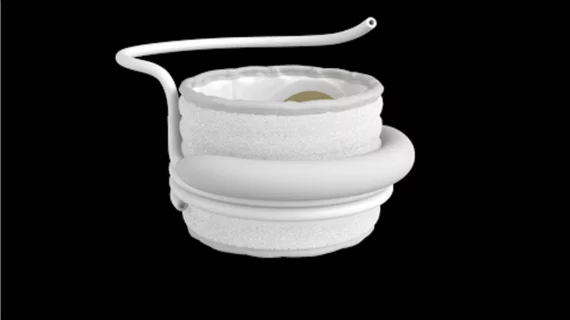
Transfemoral (TF) transcatheter mitral valve replacement (TMVR) is both safe and effective, according to new real-world data published in JACC: Cardiovascular Interventions.[1] The study’s authors tracked patients treated with nine different devices, including those made by Medtronic, Edwards Lifesciences and Abbott.
“Early TMVR experience largely relied on transapical (TA) access, which requires a mini-thoracotomy and direct left ventricular (LV) puncture,” wrote first author Dr. Lena Strotmann, a researcher with University Heart and Vascular Center Hamburg in Germany, and colleagues. “Data from transcatheter aortic valve replacement have indicated that TA access may be associated with higher procedural invasiveness, delayed recovery, and increased morbidity and mortality compared with transfemoral (TF) and transseptal approaches. Consequently, TF access has gained increasing attention as a less invasive alternative. By avoiding thoracotomy and LV injury, TF TMVR has the potential to reduce periprocedural complications and improve recovery.”
Strotmann et al. tracked data from 124 patients treated all over the world from October 2016 to December 2025. The median age was 79 years old, and 50% were women. Patients presented with a high burden of comorbidities, including atrial fibrillation (79.7%) and coronary artery disease (66.9%). All data came from the CHOICE-MI registry.
Patients were treated with one of nine devices: the AltaValve device from 4C Medical Technologies, the CardiAQ device from Edwards Lifesciences, the Cardiovalve device from Cardiovalve, the Cephea device from Abbott, the Evoque device from Edwards Lifesciences, the HighLife device from HighLife, the Innovalve device from Innovalve Bio Medical, the Intrepid device from Medtronic and the Sapien M3 device from Edwards Lifesciences.
Overall, the technical success rate was 91.1% and the procedural mortality rate was 0.8%. The cardiovascular mortality rate was 14.7% after one year and 20.3% after two years. The study’s primary endpoint—a composite of all-cause mortality, cardiovascular mortality and heart failure (HF) hospitalizations—occurred in 44.1% of patients after one year and 52.4% after two years.
Among the 117 patients with available echocardiographic data, mitral regurgitation was eliminated in 74.4% and reduced to ≤1 for nearly all patients for up to two years. This “profound and durable” reduction was linked to “progressive echocardiographic reverse remodeling,” the authors noted, and the two-year outcomes “reflect the advanced disease stage of this high-risk population.”
In addition, the presence of atrial fibrillation was linked to a significantly higher risk of a poor clinical outcome.
“This observation is highly consistent with broader experiences in transcatheter mitral interventions. For instance, in patients undergoing mitral valve transcatheter edge-to-edge repair (M-TEER), preprocedural atrial fibrillation has been confirmed as a strong independent predictor for long-term mortality, significantly increasing the risk for major adverse cardiovascular events. Similarly, prior population-based analyses have demonstrated that atrial fibrillation is associated with substantially higher rates of mortality and HF hospitalization following M-TEER interventions.”
Overall, the authors wrote that these registry data highlight the value of TF TMVR.
“These real-world data from a contemporary registry including multiple devices demonstrate that TF TMVR represents a feasible therapy offering high procedural success, durable elimination of mitral regurgitation and meaningful clinical improvement in a high-risk population,” the group concluded. Future studies should focus on refining patient selection, optimizing antithrombotic strategies, and establishing long-term durability, and randomized comparisons with alternative therapies will be critical to define the role of TF TMVR within contemporary treatment algorithms.”
Click here to read the full study in JACC: Cardiovascular Interventions, an American College of Cardiology journal.

Michael has more than 19 years of experience as a professional writer and editor. He has written at length about cardiology, radiology, artificial intelligence and other key healthcare topics.