
Myval TAVR valve associated with positive durability data after 4 years
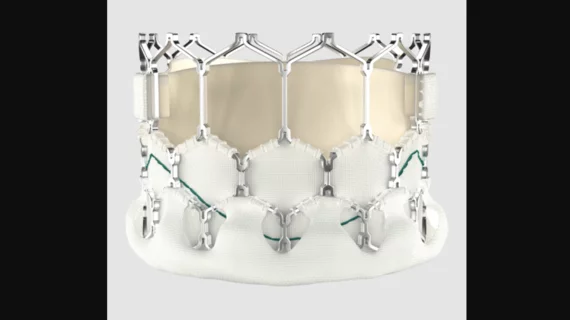
The balloon-expandable Myval transcatheter aortic valve replacement (TAVR) valve is associated with positive real-world data after four years, according to a new analysis published in EuroIntervention.[1]
Indian medtech company Meril Life Sciences has been manufacturing its Myval TAVR valve for years. The devices are already approved and available in both India and Europe, but they have not gained U.S. Food and Drug Administration approval.
The LANDMARK clinical trial recently found that the Myval valve was linked to one-year outcomes that were comparable to the Evolut TAVR platform from Medtronic, and the Sapien 3 TAVR platform from Edwards Lifesciences.
For this latest analysis, however, researchers wanted to focus on the long-term durability of these transcatheter heart valves from Meril Life Sciences. The group tracked data from 366 patients from nine different facilities who underwent TAVR with the Myval valve from December 2017 to April 2020. Four-year follow-up data was available for all patients. The authors focused on Valve Academic Research Consortium (VARC)-3-defined endpoints.
Overall, the four-year mortality rate was 18.2%. The mean aortic valve gradient was 11.18 mmHg after one year and 11.96 mmHg after four years. The mean aortic valve area was 1.75 cm2 after one year and 1.66 cm2 after four years. Residual aortic regurgitation that was greater than moderate was identified in 9.2% of patients after four years.
The rates of symptomatic valve failure, stage 2 hemodynamic valve deterioration and stage 3 hemodynamic valve deterioration were 3.3%, 9.7% and 0.7%, respectively, after four years. In addition, moderate and severe patient-prosthesis mismatch were seen in 3.6% and 2.1% of patients, respectively.
“Four-year follow-up in real-world patients undergoing TAVR with the Myval prosthesis demonstrates acceptable durability, with results comparable to contemporary balloon-expandable and self-expanding devices,” wrote first author Akash Jain, MD, DM, a researcher with University Clinic Hospital of Valladolid in Spain, and colleagues. “Further studies with extended follow-up and multimodal imaging are warranted to confirm these findings and explore predictors of valve deterioration.”
The group also noted that the four-year durability data suggest patients should face a low risk of experiencing a complication that requires reintervention.
“Favorable midterm durability data could help to extend the indication of TAVR to a younger population,” they wrote.
Jain and other co-authors did have working relationships with Meril Life Sciences.
Click here to read the full study.

Michael has more than 19 years of experience as a professional writer and editor. He has written at length about cardiology, radiology, artificial intelligence and other key healthcare topics.