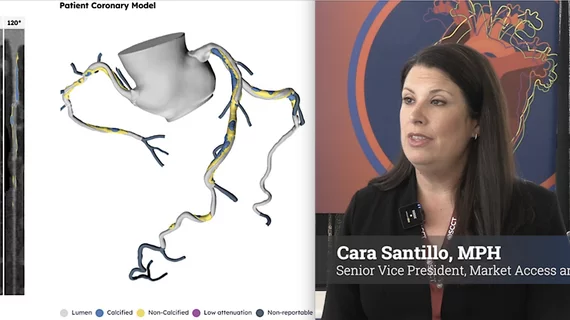
New codes for these technologies have made a world of difference for clinicians. Reimbursement for the use of AI is an area where cardiology is far ahead of most other healthcare specialties.
The law reflects growing interest in using existing imaging studies to identify cardiovascular disease risk without requiring additional scans, radiation exposure or costs.
"We really should have a system that is patient-centric, physician-led, and professionally managed, but in a cost-effective way," Rick Snyder, MD, said.
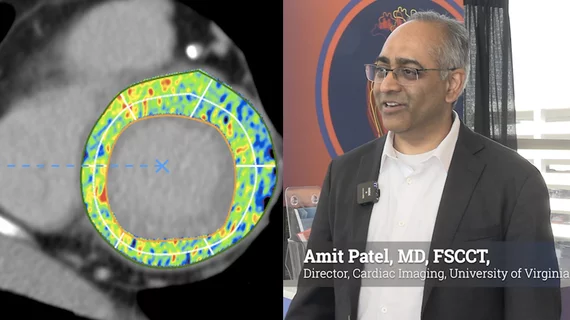
MRI scans have traditionally been used for extracellular volume assessments. That is starting to change, however, as cardiac CT moves beyond its typical focus on the coronary arteries.
Raj Makkar, MD, Cedars-Sinai, explains the late-breaking data from the Align-AR trial on the first 500 patients treated for aortic regurgitation using the Jena Valve TAVR device.
The late-breaking five-year results of the Evolut Low-Risk Trial presented at ACC.25 showed positive results for the Evolut TAVR system when compared to SAVR.
ACC Immediate Past President Cathie Biga spoke to Cardiovascular Business about some of the challenges healthcare faces in the wake of mass layoffs and significant funding cuts put in place by the Trump administration.
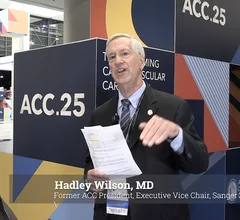
Former American College of Cardiology president Hadley Wilson, MD, executive vice chair of Atrium Health Sanger Heart and Vascular Institute, explains his main takeaway messages from the ACC 2025 late-breaking trials.
Naples Comprehensive Health is building up what it hopes will be a nationally recognized cardiology program. Robert Cubeddu, MD, and Dee Dee Wang, MD, spoke with Cardiovascular Business about the journey so far.