
Reimbursement expected to drive implementation of CCTA, coronary plaque analysis
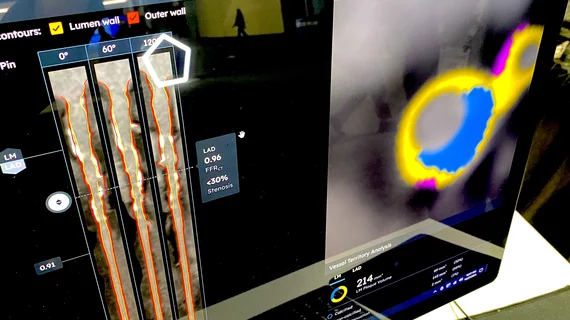
For years, cardiac imaging experts have predicted coronary computed tomography angiography (CCTA) may become the primary imaging modality for coronary artery disease and eliminate the need for invasive diagnostic catheterizations. That prediction is now coming true. With the help of artificial intelligence (AI) and the first and only reimbursements codes for imaging-based AI algorithms, CCTA is now likely to see much more implementation in 2026 and beyond.
At RSNA 2025 in Chicago, CT vendors with workhorse scanners all put CCTA at the forefront of their discussions. Vendors and radiology speakers in AI, CT and cardiac imaging sessions also highlighted the growing adoption of CCTA and pointed to new, higher Medicare reimbursements that doubled payments for CCTA in 2025 as well as new payment codes for CCTA AI analysis. While AI is a massive theme at RSNA, only two FDA-cleared AI models in the world of medical imaging have Category I CPT codes for payments, and both of them were built to evaluate CCTA images. Speakers said this is a positive nod to the large amount of data collected in CCTA trials over the past 20 years and to the ability of the technology to reduce downstream costs and procedures.
Experts also predict CCTA will be used as a new paradigm in cardiology screening for prevention, allowing physicians to see the detailed progression of plaque decades before a patient becomes symptomatic. While CT can clearly visualize plaques, their 3D structure and the types and amounts of stable and constable plaques really determine a patient's risk of a heart attack. However, it was too time consuming to make manual measurements in a reasonable amount of time to extract and make that information useful and consistent. But AI automation of the complex task has changed that. In addition, AI models have ben designed to assess fractional flow reserve (FFR) coronary blood flow measurements.
"I see CCTA evolving and becoming the cornerstone of the management of patients with coronary artery disease. And the reason is, you can start medication for treating atherosclerosis and you can repeat the scan to understand whether the medication was effective. Then you can really make a surveillance of the disease in a way that was not possible before. Then with AI, you have then an objective parameter to understand what the changes are in plaque volume and composition from the medication. So I think it is really personalizing care," explained Carlos Collet, MD, PhD, director of cardiovascular imaging, physiology and translational therapeutics for the Cardiovascular Research Foundation, said in a recent interview with Cardiovascular Business. "I've personally seen spectacular cases of plaque regression."
Heartflow gained FDA clearance for its FFR-CT analysis in November 2014, and it became the first AI to be added to U.S. cardiology guidelines with the ACC Chest Pain Guidelines in 2021. It also became the first medical imaging AI algorithm to gain a Category I CPT code, 75580, for reimbursement that began in January 2025. Keya Medical was the second vendor to gain FDA clearance for AI-enabled FFR-CT evaluations in 2022.
AI soft plaque analysis is now poised to follow a similar path and will soon become only the second radiology AI to gain its own CPT code.
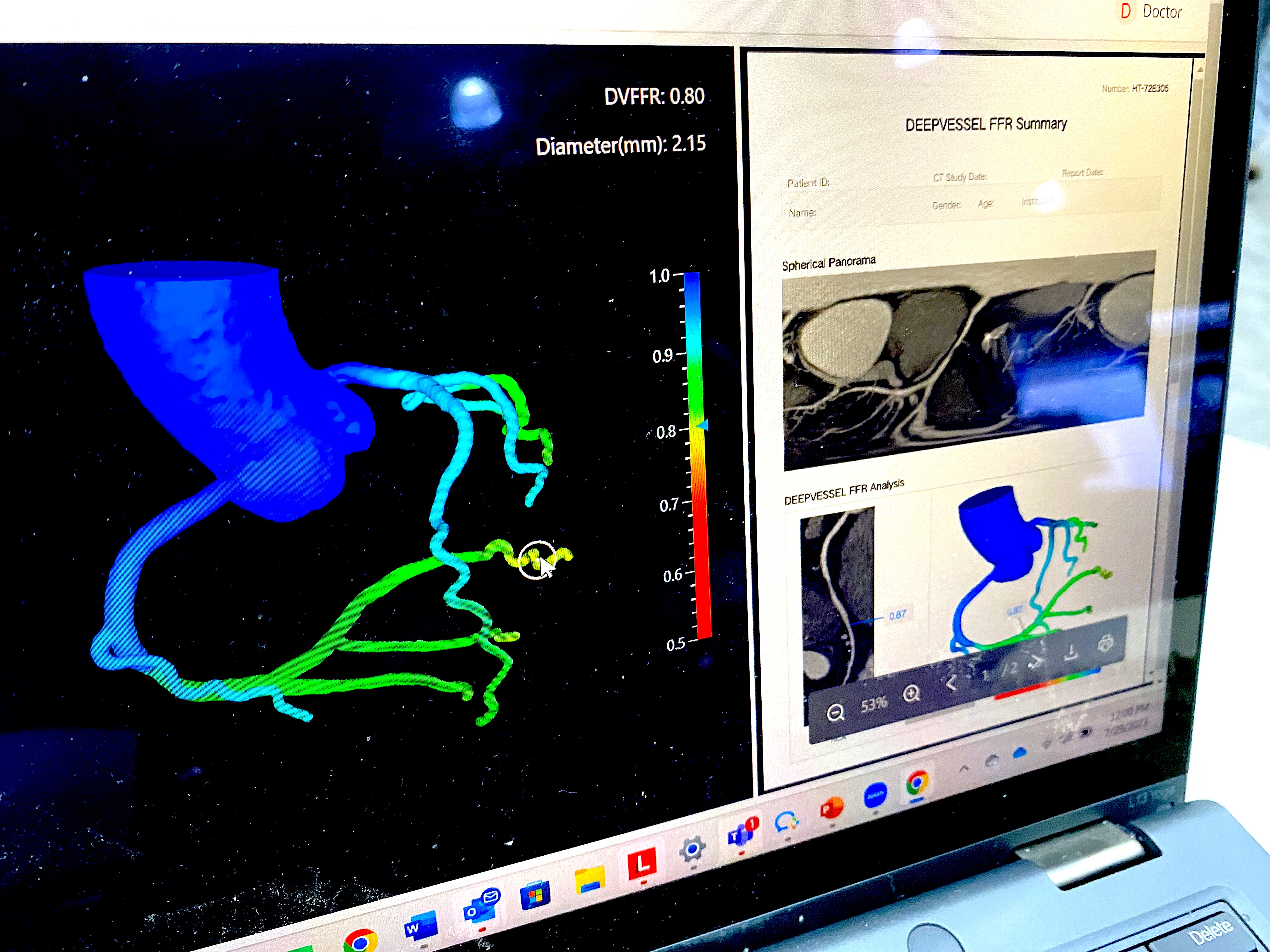
Keya Medical's AI FFR-CT showing coronary flow from a cardiac CT scan shown at SCCT 2023.
Coronary plaque AI will likely be the way of the future
Starting Jan. 1, 2026, AI-driven quantification and characterization of coronary atherosclerotic plaque in CCTA will have its own Category I CPT code, 75577. The reimbursement code is widely expected to expedite CCTA and AI coronary plaque analysis adoption.
Cleerly was the first company to gain FDA clearance for an AI algorithm that can quantify and break down the various types of plaques in the coronaries in 2020. Heartflow followed in 2022 and Elucid was next in 2024. A number of companies have now received FDA clearance for their own versions of the technology. This includes Caristo in March, Artrya Limited in August and Circle Cardiovascular in October. At RSNA 2025, meanwhile, Ziosoft and Siemens Healthineers both displayed 510(k)-pending versions of their own plaque analysis software options.
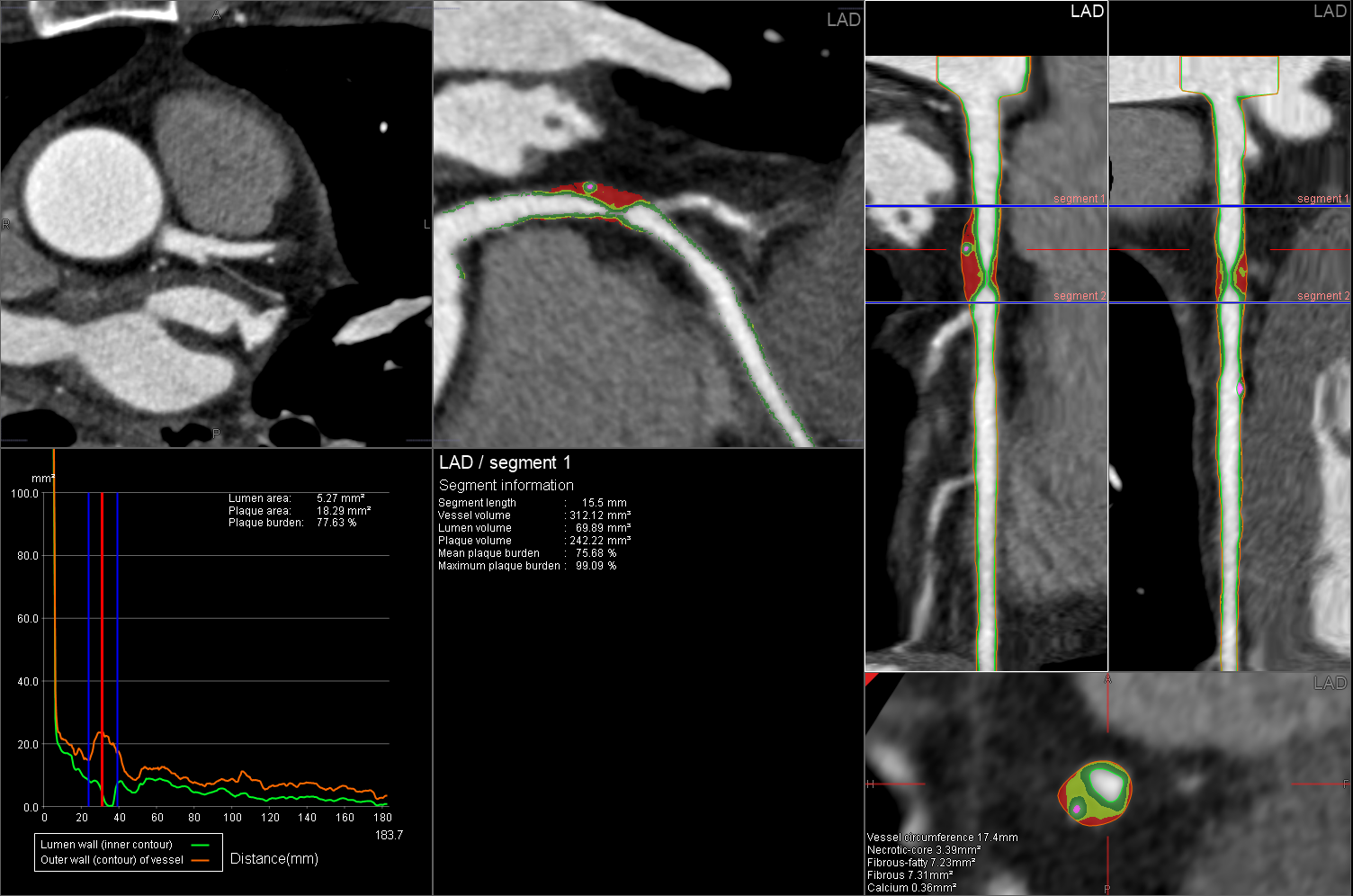
Ziosoft's Plaque Analysis AI analysis for CCTA scans. New reimbursement for these algorithms has spurred vendors to introduce several new algorithms in the last several months.
"I think when you start to see the potential opportunity for reimbursement, as you see with fractional flow reserve, with plaque analysis, you see a greater degree of attention from the vendors in spending the money to bring forward those procedures," Eric Rubin, MD, vice president of clinical operations at Virtua Health, and the American College of Radiology (ACR) CPT advisor to the American Medical Association (AMA), explained. He spoke in sessions on AI reimbursement at RSNA 2025 and then discussed the topic with Cardiology Business.
He said FFR-CT and plaque analysis were able to gain Category 1 CPT codes because Cleerly and Heartflow invested heavily in clinical studies to show the evidence not how the AI can impact patient care.
"We are in a sea of AI algorithms, but what we are really missing is the clinical validation of those algorithms to understand what impact they have on patient care and outcomes," radiologist Michael Morris, MD, director of cardiac CT and MRI at Banner Health, said at RSNA. "With FFR-CT and plaque analysis, they are leading by example in terms of demonstrating with high-quality evidence you can then tie it to a CPT code, get reimbursements and drive utilization to improve care for patients."
He wished more AI vendors would follow that lead to anchor the evidence with some kind of clinically relevant outcome to help show clinicians the value of the AI and enable payments.
Morris views AI-powered plaque analysis technology as a significant upgrade in radiology, because the AI gives detailed assessments instead of just leaving it up to the clinicians to estimate. He said this translates into more actionable information for the referring physician that leads to better patient care.

Dave Fornell has covered healthcare for more than 17 years, with a focus in cardiology and radiology. Fornell is a 5-time winner of a Jesse H. Neal Award, the most prestigious editorial honors in the field of specialized journalism. The wins included best technical content, best use of social media and best COVID-19 coverage. Fornell was also a three-time Neal finalist for best range of work by a single author. He produces more than 100 editorial videos each year, most of them interviews with key opinion leaders in medicine. He also writes technical articles, covers key trends, conducts video hospital site visits, and is very involved with social media. E-mail: [email protected]