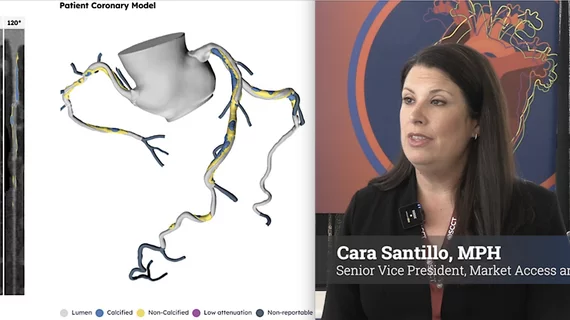
New codes for these technologies have made a world of difference for clinicians. Reimbursement for the use of AI is an area where cardiology is far ahead of most other healthcare specialties.
The law reflects growing interest in using existing imaging studies to identify cardiovascular disease risk without requiring additional scans, radiation exposure or costs.
"We really should have a system that is patient-centric, physician-led, and professionally managed, but in a cost-effective way," Rick Snyder, MD, said.
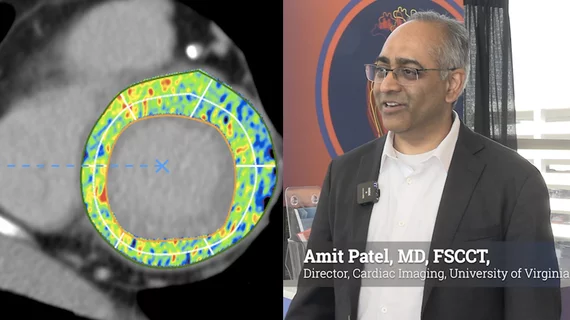
MRI scans have traditionally been used for extracellular volume assessments. That is starting to change, however, as cardiac CT moves beyond its typical focus on the coronary arteries.
There were some concerns among researchers after one study suggested iFR may increase the risk of mortality. New data presented at TCT 2023, however, showed that the two technologies are linked to similar outcomes.
The mitral valve has been an especially challenging target for transcatheter interventions, but there are reasons to think key breakthroughs are on the horizon. We talked to Kendra Grubb, MD, about this and other ongoing trends at TCT 2023.
Kendra Grubb, MD, one of the country's leading experts on cardiac surgery, discussed what she tells her patients when they ask if TAVR is better than SAVR for treating severe aortic stenosis.
Could this late-breaking clinical trial from TCT 2023 be a sign of things to come in the years ahead? Samir Kapadia, MD, explored the topic in a new interview.
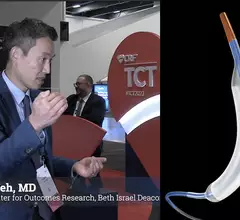
Robert Yeh, MD, detailed the importance of the pivotal AGENT IDE trial, which focused on the use of a paclitaxel-coated balloon to treat in-stent restenosis.