News

AI healthcare doctor surgery procedure artificial intelligence

Clinlab.AI will oversee every aspect of this new-look laboratory, working to integrate it with the practice's workflows in a way that boosts patient care and speeds up treatment decisions.

robot reviewing heart data

AI can help care teams identify heart patients who would benefit from TAVR or another life-changing valve intervention.

Thumbnail

More than 33,000 devices are affected by this recall. Customers may need to return and replace the purge cassettes included with their devices due to a risk of serious injury or death. 

 Former American College of Cardiology president Hadley Wilson, MD, FACC, executive vice chair of Atrium Health's Sanger Heart and Vascular Institute, shared his thoughts on what he saw as the key studies in the above video interview with Cardiovascular Business. He covered numerous trials in more detail in the video. #ACC26 #ACC

Hadley Wilson, MD, a former American College of Cardiology president, spoke to Cardiovascular Business about several studies presented at ACC.26.

Michiel Voskuil, MD, PhD, an interventional cardiologist and professor at University Medical Center Utrecht in the Netherlands, presented his team’s data on the ACC.26 stage.

Patients with coronary artery disease and severe aortic stenosis often undergo PCI before TAVR. According to new data presented at ACC.26, however, deferring PCI is associated with comparable outcomes as well as a reduced bleeding risk.

Whoop, a Boston-based wearable technologies company, has raised $575 million in new financing at a $10.1 billion valuation. Investors include Abbott, Mayo Clinic, LeBron James and Cristiano Ronaldo.

Whoop, a Boston-based wearable technologies company, raised the new funding on a $10.1 billion evaluation.

Interventional cardiologist Roxana Mehran, MD, officially started her one-year term as the president of the American College of Cardiology (ACC) on the closing day of ACC.26, the group’s annual conference in New Orleans.

A prominent figure in the fields of interventional cardiology and women’s health is now leading the American College of Cardiology.

Adam Greenbaum, MD, presents late-breaking data at ACC.26.

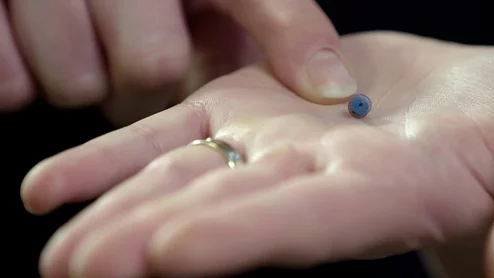
A new embolic protection device from Emboline was noninferior to the FDA-approved Sentinel device in terms of safety and efficacy. In addition, it captured much more TAVR-generated debris and was linked to an improved technical success rate. 

Kenzie Thompson, BSN, RCIS, cardiovascular invasive specialist, St. Luke's Mid-America Heart Institute, shares advice she gave to cath lab technologists and nurses during a session at the Transcatheter Cardiovascular Therapeutics (TCT) meeting.

“It is your responsibility to be the patient’s advocate,” one expert explained. “We, as the nurses and technologists, have to speak up when we see something that isn’t right.”

The Amplatzer Piccolo Occluder for transcatheter patent ductus arteriosus (PDA) closure in premature infants. Photo courtesy of Abbott.

Transcatheter patent ductus arteriosus (PDA) closure has been a mainstay in congenital interventional cardiology for decades, but changes in the standard of care have resulted in catheter-based treatments overtaking surgical procedures. 

bicuspid aortic valve disease TAVR

More and more care teams are treating BAV stenosis with TAVR instead of surgical aortic valve replacement. Self-expanding and balloon-expandable valves appear to have their own benefits—as well as their own risks. 

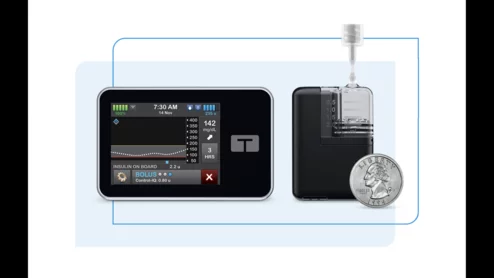
Tandem Diabetes Care is recalling a recent update of the mobile app for its t:slim X2 insulin pump due to repeated software issues that may cause the pump to shut down unexpectedly. The FDA has said this is a Class I recall.

Speaker issues are causing the devices to stop communicating with the user's CGM. Dozens of patient injuries have been reported, and the company is prepping a software update.


Around the web

The ramifications of the conflict in the Middle East may soon extend beyond the gas pump and into the healthcare sector, experts are cautioning.